
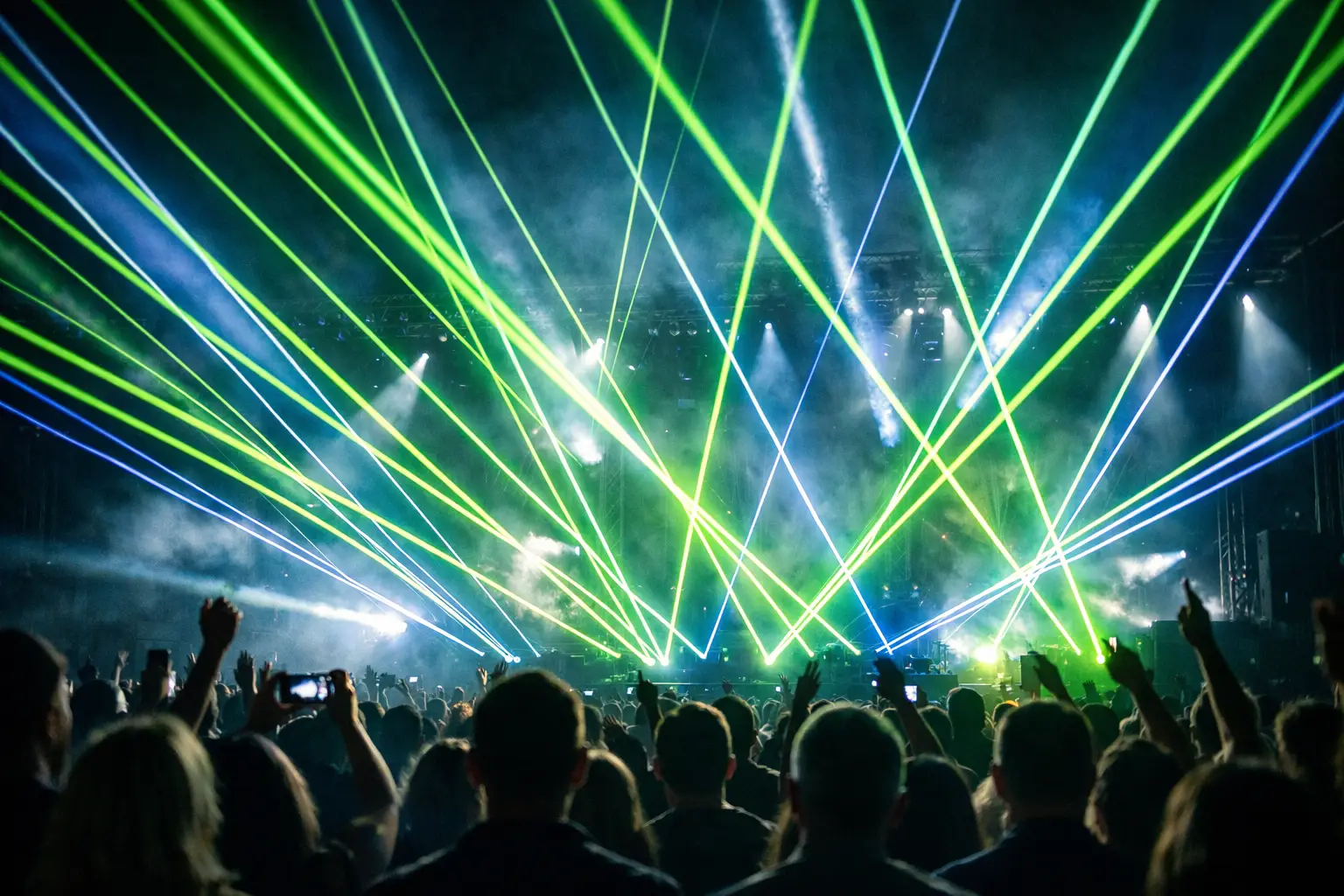
The moment the first beat hits, the room changes. A music synchronized laser show does more than add light to an event – it gives the music a physical presence. Beams slice through haze, color bursts hit on the drop, and custom graphics race across the air with the rhythm. For a packed concert floor, a wedding reception, a stadium crowd, or a brand launch, that kind of timing creates the instant people pull out their phones, cheer louder, and remember long after the final song.
Laser production is not a plug-in effect. The shows that create a true WOW factor are built around the room, the audience, the soundtrack, and the purpose of the event. That is where creative design, high-output equipment, and experienced operation come together.
What a Music Synchronized Laser Show Really Delivers
Music creates emotion. Lasers give that emotion shape, scale, and movement. When programming is done with precision, every major musical cue can become a visual event: a tight aerial beam sequence during a build, a field of saturated color at the chorus, a massive fan of light for the finale, or animated artwork that reinforces a brand message.
The effect is especially powerful because it happens in real time. Audiences do not simply watch a lighting fixture change colors. They feel the music expand around them. A carefully designed laser sequence can make an intimate dance floor feel cinematic or turn a municipal fairground into a full-scale nighttime spectacle.
That visual impact matters for events competing for attention. Corporate teams need launch moments that make a new product feel larger than life. Festival producers need standout scenes that separate one stage from the next. Private hosts want guests to experience more than another playlist and dance floor. A synchronized laser production gives the event a signature moment.
Great Shows Begin Before the First Note
The strongest laser experiences are planned, not improvised. Music selection comes first because tempo, genre, transitions, and major accents drive the programming. A hard-hitting electronic track calls for a different visual language than an orchestral finale, a hip-hop set, or a romantic first dance.
Custom programming lets a show follow the emotional arc of a song rather than simply pulsing randomly to sound. The opening can build anticipation with narrow beams and restrained color. As the energy rises, the show can widen into aerial fans, tunnels, waves, and high-speed effects. At the biggest musical moment, the entire visual field can explode with movement.
Event goals shape the design too. A branded production may incorporate a logo, product outline, or themed animation. A bar or bat mitzvah may feature personalized graphics and bold, dance-floor energy. A concert production may focus on massive aerial looks that carry across a large venue. The right creative approach depends on what the audience needs to feel and what the event needs to achieve.
Scale Changes Everything
A laser show for 75 guests and a show for 80,000 people can both be unforgettable, but they require very different systems and production decisions. Projector output, throw distance, ambient light, viewing angles, atmospheric effects, power distribution, mounting positions, and programming style all affect the final result.
For a darker ballroom, nightclub, or theater, a compact professional RGB system may create rich, highly visible effects without overwhelming the room. For outdoor concerts, stadium events, city celebrations, and large festivals, higher-powered systems are often necessary to project crisp, intense beams over greater distances and compete with larger environments. Connecticut Laser Productions deploys professional laser systems from 40 watts through 200 watts and beyond, allowing the visual impact to match the scale of the crowd.
More power is not automatically better. A 200-watt projector is not the right answer for every indoor event, just as a modest system can disappear at a large outdoor venue. The goal is appropriate output, properly positioned equipment, and a visual design that reads clearly from where guests will actually stand.
Indoor and Outdoor Shows Need Different Thinking
Indoor laser shows benefit from controlled conditions. Lighting can be managed, mounting locations are often predictable, and haze can be placed to reveal every beam with dramatic clarity. The trade-off is that indoor spaces can have lower ceilings, reflective surfaces, tighter audience areas, and venue rules that need to be addressed well before show day.
Outdoor productions bring a different kind of scale. Lasers can stretch across wide open spaces, frame a stage, or create dramatic skyline-facing moments. They also require careful planning around weather, projection paths, site layout, ambient light, aircraft considerations, and the practical reality of powering and protecting professional equipment outdoors.
This is why a site assessment matters. The room or field is not just a backdrop. It is part of the show system. A production team needs to understand sightlines, stage placement, load-in access, nearby structures, audience flow, and the exact locations where laser effects will have the greatest impact without creating operational compromises.
Safety Is Part of the Spectacle
The most breathtaking visual spectacle is one that has been engineered and operated responsibly. Professional laser production requires more than a powerful projector and a playlist. It requires trained operators, compliant equipment, controlled projection zones, appropriate mounting, and a detailed understanding of how beams interact with audiences, performers, cameras, reflective materials, and the venue itself.
A properly designed show accounts for beam termination and keeps effects within approved paths. It also considers whether the event uses fog or haze, where performers move, how scenic elements reflect light, and whether the show is operating indoors, outdoors, near airports, or within a tightly managed public event footprint.
Clients should be wary of anyone treating lasers like a casual rental item. The equipment may look spectacular, but safe operation is a professional discipline. Licensed and insured operators bring both creative confidence and the technical judgment needed to protect the audience, venue, and production schedule.
Make the Lasers Part of the Production, Not an Add-On
Lasers are at their best when they are integrated with the entire event environment. They can work alongside stage lighting, video walls, scenic elements, DJ performance, live musicians, pyro alternatives, and branded content. The show feels intentional when every production element supports the same musical and visual direction.
For example, a product launch can begin with a darkened room and a restrained audio build. A custom laser animation can introduce the logo, followed by high-energy beams that reveal the product or speaker. At a concert, lasers can take over during the artist’s biggest track, creating a visual peak without competing with every song in the set.
There is also a practical production benefit: lasers deliver enormous visual reach without requiring a stage full of physical scenery. That can make them an excellent choice for touring acts, transformed venues, and events where a fast, high-impact visual upgrade is needed. It still takes thoughtful coordination. Timing, rigging, power, show control, and rehearsal time should all be part of the production conversation.
The Right Questions to Ask Before Booking
Before choosing a laser provider, event planners and producers should clarify the audience size, venue or site, event date, music format, desired visual mood, and whether the show needs custom logos or animations. It also helps to identify the exact moment that needs to land hardest: the grand opening, headliner entrance, first dance, midnight countdown, award reveal, or finale.
Ask what projector power range is being proposed and why it fits the space. Ask who will program and operate the system on-site. Ask how safety planning, insurance, approvals, and venue coordination will be handled. These are not dry technical details – they are what allow the creative idea to become pure visual magic without last-minute surprises.
For buyers seeking permanent installations or professional equipment, the same questions apply at a system-design level. A quality RGB laser projector needs to be matched to room size, intended throw, ambient light, control requirements, duty cycle, and the operator’s experience. The right Luminance RGB system can be a major asset for venues, touring professionals, educational facilities, and entertainment installations, but system capability must match the real-world application.
A music synchronized laser show earns its impact through the details audiences never see: the programming behind the beat, the projector choice behind the brightness, the planning behind the safety, and the operator behind the console. Give those details the attention they deserve, and your event will not merely look impressive – it will have a moment the entire crowd feels together.
No responses yet