
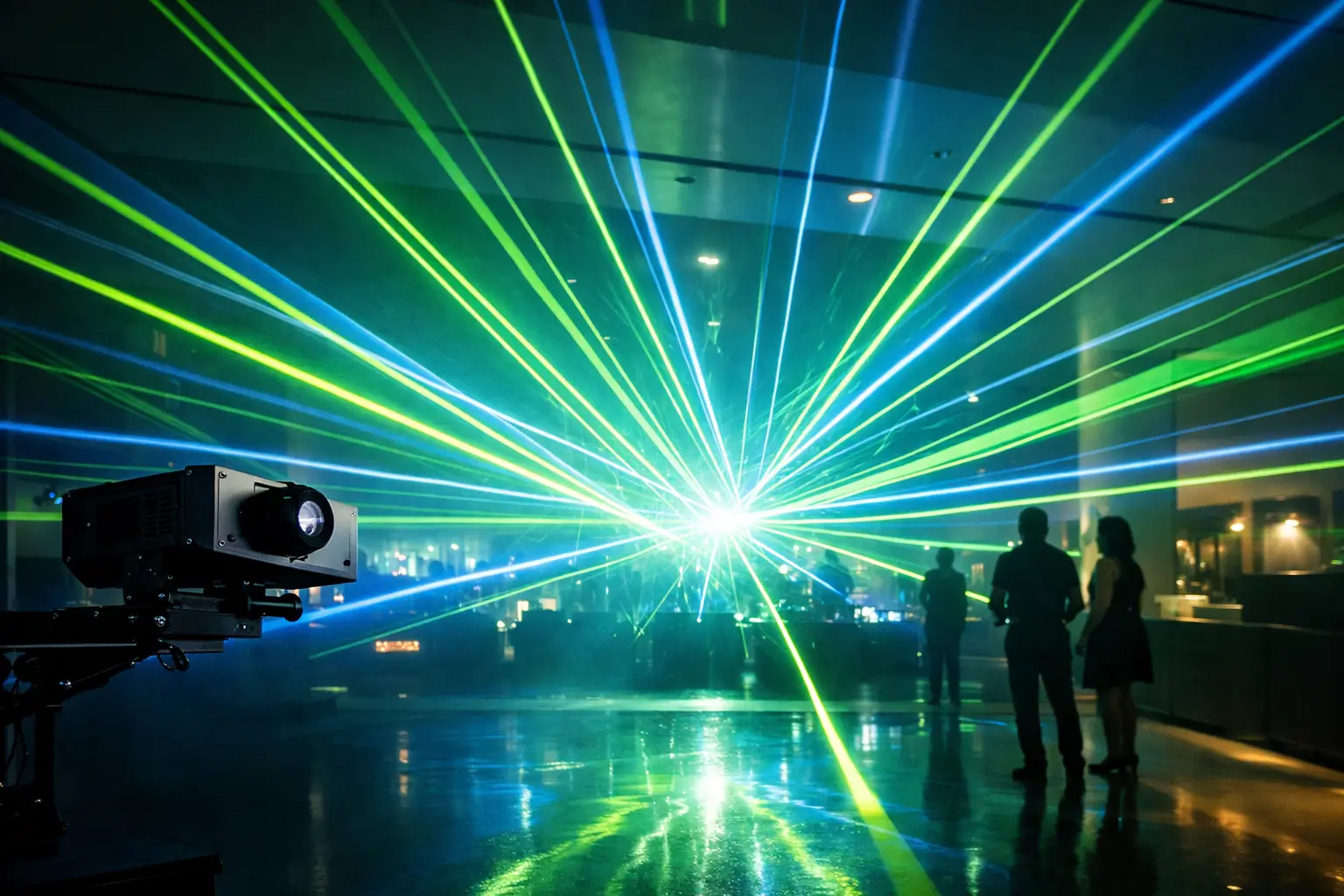
A packed nightclub should not need a touring production to feel electric. A museum lobby should not go dark after opening night. A stadium entrance should have more impact than another LED screen. A permanent laser installation gives a venue, attraction, or brand a repeatable visual signature – powerful color, kinetic beams, animated graphics, and music-driven energy available whenever the moment calls for it.
This is not a laser projector placed on a truss and left running. A true installation is an engineered entertainment system built around the room, the audience, the show schedule, and the operating team. When it is designed correctly, the result is pure visual magic that can transform an ordinary night of programming into an experience guests film, share, and remember.
What a Permanent Laser Installation Can Do
Permanent laser systems bring high-impact visual production to spaces that need more than occasional spectacle. Nightclubs can launch beat-synced aerial effects every weekend. Arenas can create a high-energy player introduction without rebuilding a show package for every game. Casinos, resorts, theme parks, cruise terminals, galleries, and entertainment venues can turn arrivals, countdowns, and featured moments into a breathtaking visual spectacle.
The creative range is enormous. RGB lasers can paint rich full-color beams across a room, create dramatic fan effects over a dance floor, trace architectural lines, project custom logos, or deliver mind-blowing animations onto approved surfaces. With proper programming, the visual language can shift with the calendar: a branded product launch one night, a holiday show the next, then a concert-ready atmosphere for a sold-out weekend.
For operators, the biggest advantage is consistency. The system is available where it lives. There is no truck call, no last-minute rental availability question, and no need to rebuild a signature look from scratch for every activation. Your property gets a production asset, not a one-time effect.
Design Starts With the Room, Not the Projector
The wrong question is, “How many watts do we need?” Wattage matters, but it is only one part of a successful design. The right starting point is how the audience experiences the space.
A compact indoor lounge with controlled lighting may achieve extraordinary beam presence with a different system than an open-air amphitheater, a large casino atrium, or a stadium concourse. Ceiling height, throw distance, ambient light, haze capability, sightlines, projection surfaces, audience locations, and architectural obstructions all affect the final result.
A permanent laser installation should be designed around several connected decisions: projector location, beam paths, mounting structure, electrical service, cooling and ventilation, control infrastructure, show content, and operator access. A projector hidden in a difficult-to-service ceiling pocket may look clean on a drawing but become a costly headache after installation. A system that cannot be aimed, inspected, and maintained properly will not deliver its full potential for long.
This is where professional site planning earns its value. Experienced designers identify the visual opportunities and the limitations before equipment is ordered. They determine whether the best answer is one high-output projector, multiple projectors for coverage and redundancy, or a hybrid approach that combines laser effects with lighting, video, scenic elements, and atmospheric effects.
Power Should Match the Environment
Professional RGB laser projectors range from strong indoor units to massive outdoor-capable systems in the 40-watt to 200-watt-plus class. More power can create a larger, brighter presence, especially in big venues and outdoor environments. It can also introduce more demanding safety, control, and engineering requirements.
For an intimate venue, the goal may be precise color and tightly controlled beam choreography rather than maximum output. For a large arena, festival site, or exterior landmark feature, high-output equipment may be necessary to create the scale audiences expect. The right system is the one that produces the intended WOW factor while remaining practical, compliant, and manageable for the venue.
Safety Is Part of the Show Design
Lasers are extraordinary entertainment tools because they are concentrated light. That is also why professional safety planning is non-negotiable.
A permanent installation must account for audience exposure, accessible beam paths, projector placement, termination zones, scanning limits, emergency stop systems, interlocks, physical security, and the operating conditions of the venue. The system must also be evaluated according to applicable federal, state, local, and venue requirements. Outdoor use, aircraft-sensitive locations, public spaces, and changing event layouts can add further layers of review.
The most dramatic show is never worth an unsafe setup. Professional operation protects guests, performers, staff, and the investment itself. It also protects the venue from the disruption and liability that can follow when equipment is installed or used without qualified oversight.
At Connecticut Laser Productions, that show-first mindset is backed by more than 20 years of laser-production experience, licensed and insured operators, custom programming, and safety-compliant professional systems. The goal is not simply to make a room brighter. It is to create a controlled, polished visual environment that hits hard every time it runs.
Control Makes the System Usable Every Day
An installation is only valuable if the venue can operate it with confidence. That does not mean every staff member needs to become a laser technician. It means the control strategy should fit the people who will actually use the system.
Some venues need a fully programmed playback approach: select a show, press go, and let a prebuilt sequence run with approved lighting and audio cues. Others need a trained in-house operator with access to multiple looks, custom timing, and special-event programming. Major venues may integrate laser control into a larger production network alongside lighting consoles, timecode, media servers, and show control.
The best choice depends on how often content changes. A branded visitor attraction may use a tightly controlled daily sequence. A nightclub may need dozens of music-responsive looks. An arena may want dedicated packages for player introductions, concerts, sponsor activations, and holiday events. In each case, intuitive control and clear operating procedures matter as much as projector output.
Content Cannot Be an Afterthought
A laser projector is the instrument. The programming is the performance.
Custom content gives an installed system its identity. Abstract beam looks can build energy before doors open. Precise cueing can make a DJ drop feel bigger. Custom animations can place a logo, mascot, message, or product outline into a live environment. For theatrical or attraction use, laser content can support storytelling with timing, motion, color, and surprise.
Plan for content updates from the beginning. Seasonal campaigns, new sponsors, touring acts, and changing brand standards all create reasons to refresh the visual package. A system with room for new programming stays exciting long after the installation date.
Ownership, Service, and Long-Term Value
A permanent system is a capital investment, so the conversation should go beyond the initial equipment price. Ask how the system will be serviced, who has access to configuration settings, how content is backed up, what replacement path exists if a component fails, and whether the design allows for future expansion.
Environmental conditions deserve close attention. Dust, smoke residue, heat, vibration, moisture, and public access can shorten equipment life if they are not addressed in the design. Outdoor systems may require weather-rated housings, environmental monitoring, and more frequent maintenance. Indoor systems still need inspection, optical cleaning, alignment checks, and periodic safety verification.
There is also a practical financial question: how often will the venue use the system? For a once-a-year gala, a turnkey laser production may be the smarter move. For a venue that needs signature visuals weekly, nightly, or across a full season, ownership can create a compelling return through reduced recurring production costs, stronger ticket appeal, premium event positioning, and new sponsorship opportunities.
Build a Feature Guests Come Back to See
A permanent laser installation works best when it is treated as part of the venue experience, not as decorative equipment. Put it at the center of key moments: the reveal, the countdown, the entrance, the first beat, the championship celebration, the brand announcement. Give audiences a reason to look up and pull out their phones.
The real opportunity is bigger than bright beams. It is the chance to give your space a recognizable pulse – one that can scale from a normal operating night to a full-throttle spectacle when the biggest crowd of the year walks through the door.
No responses yet