


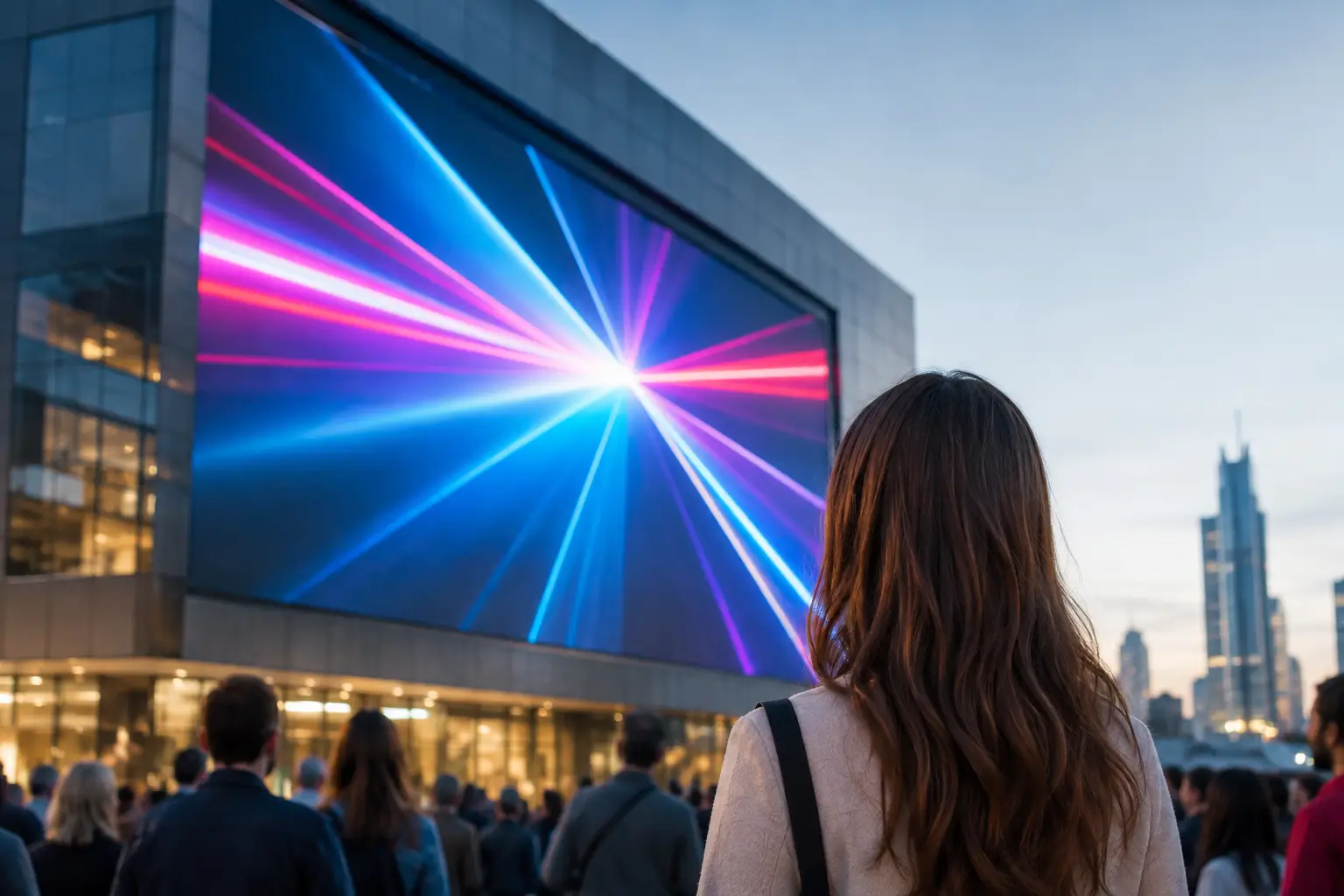
A campaign can have a beautiful logo, a huge media budget, and a carefully planned guest list, then still fade into the background the moment the event begins. The strongest laser campaign examples do the opposite. They turn a brand message into a moment people point phones at, talk about on the ride home, and remember long after the screens go dark.
Laser is not just a bright effect added at the end of a program. With custom artwork, music synchronization, atmospheric elements, and the right projector power, it can become the visual engine of a launch, celebration, tour, or public spectacle. Here are nine ways to put that power to work.
1. Product launches with a dramatic reveal
A new product deserves more than a curtain pull. Build anticipation with a darkened room, a rising music track, and laser beams that carve through haze before resolving into the product name, silhouette, or campaign line. At the reveal moment, animation can outline the item in the air or send its key features racing across a stage backdrop.
This approach works especially well for automotive, technology, beverage, beauty, and consumer-electronics launches. The show should not try to explain every product detail. Its job is to establish scale, energy, and a clear visual identity before the sales presentation begins.
For a compact ballroom launch, a lower-output professional RGB system can create precise aerial effects without overpowering the room. A convention center stage, outdoor reveal, or large trade-show activation may need considerably more power and wider beam coverage. The trade-off is simple: bigger is not automatically better. The laser design must match sightlines, room dimensions, ambient light, video screens, and the audience position.
2. Stadium entrances that make the home team feel enormous
Sporting events run on anticipation. Before the first whistle, puck drop, or kickoff, a laser sequence can transform an ordinary player entrance into a full-scale battle cry. Team colors sweep over the field or arena floor. A mascot animation appears in laser light. Music hits, players emerge, and the crowd is already at maximum volume.
For a sponsor, this is valuable territory. A presenting partner can be integrated into the sequence without reducing the moment to a static advertisement. The sponsor logo might lead into the team identity, appear as part of a countdown, or punctuate a goal celebration with a short, high-energy visual hit.
Large venues need experienced production planning. High-output systems, often ranging from 40 watts to 200 watts or more depending on the design, must be placed for broad coverage and clean audience sightlines. The result should feel massive, but the system must be engineered and operated safely by licensed, insured professionals who understand venue restrictions and applicable regulations.
3. Festival countdowns that turn a crowd into one audience
A festival audience may arrive for different artists, vendors, or experiences. A synchronized laser countdown gives everyone a shared moment. Think five minutes before a headline set, midnight on New Year’s Eve, or the opening of a city celebration. The lasers can build from thin color lines into giant fan effects, animated numerals, exploding graphics, and a final burst timed precisely to the music.
The best campaign execution connects the countdown to the event’s identity. A waterfront festival can use waves and sail-inspired geometry. A food festival might build playful animations around its signature dishes. A town anniversary can bring local landmarks, founding dates, or historical symbols into the show.
Outdoor events bring extra variables: ambient light, weather, viewing distance, public access areas, and the size of the audience. A visual that reads beautifully to 500 people near a stage may disappear at a fairground serving 20,000. Production teams should develop the concept around the actual site rather than forcing an indoor-style design into an outdoor environment.
4. Branded laser advertising on a scale people cannot ignore
When a campaign needs to make a statement beyond a screen, laser advertising can place a logo, message, or custom animation where it becomes part of the event environment. This can include projections onto approved architectural surfaces, branded aerial effects at a grand opening, or a programmed visual sequence at a high-traffic nightlife activation.
The creative rule is clarity. A logo that looks perfect on a laptop may be too detailed for a large-scale laser rendering. Simplifying fine lines, selecting high-contrast color treatments, and keeping the message brief generally produce a stronger result. One bold icon and three memorable words can outperform a dense graphic with six competing ideas.
Permissions matter as much as creative. Architectural surfaces, public spaces, airspace considerations, and local rules all need to be addressed before the campaign is announced. A professional team can help identify what is realistic for the location and create an alternate presentation plan if a specific surface or viewing angle is unavailable.
5. Concert touring visuals that extend the artist’s world
A touring laser system gives an artist a visual signature that can travel from theater dates to arenas and festival stages. Lasers can frame the performer, trace the rhythm of a chorus, create tunnels above the audience, or explode into sharp geometric patterns during a drop. For electronic acts, rock tours, pop performances, and theatrical shows, that visual intensity can become part of the brand fans expect to see.
Campaign value comes from repetition with variation. The audience should recognize a certain color palette, symbol, or beam style as belonging to the artist, while each song still receives its own programmed look. A signature laser moment near the end of a set can become a shareable ritual across an entire tour.
Touring productions need equipment that is powerful, dependable, and practical to deploy night after night. It also needs programming that works with changing venue trims, stage widths, and ceiling heights. This is where scalable system design matters more than a one-size-fits-all package.
6. Retail and grand-opening experiences that create a line outside
For a flagship opening, pop-up shop, or major renovation reveal, lasers can create the sense that something special is happening before guests even enter. A branded beam canopy at the entrance, animated window-facing graphics, or a short scheduled exterior show can turn foot traffic into an audience.
Inside, a laser moment can be tied to a product demonstration, ribbon cutting, DJ set, or timed giveaway. The key is to give people a reason to stay through the reveal rather than treating the technology as background décor. Build a beginning, a peak, and a clean call to action, whether that is entering the store, posting with an event hashtag, or seeing a featured product.
Retail environments often have reflective surfaces, low ceilings, glass, and constant guest movement. Those factors affect system placement and show design. A detailed site review prevents a flashy idea from becoming a compromised installation.
7. Wedding and milestone moments with a personal signature
Not every campaign is corporate. A wedding, bar or bat mitzvah, anniversary, or milestone birthday can have its own visual identity. A couple’s monogram, a custom family crest, a favorite song turned into color and movement, or a surprise finale after dinner can create the kind of emotional reaction guests rarely forget.
The most effective private-event laser shows are personal, not generic. The show might begin elegantly with slow-moving color and names in the air, then build into a high-energy dance-floor sequence once the party opens up. This is a place for spectacle, but it should still fit the room, the guests, and the occasion.
8. Municipal celebrations that give a community its own visual story
Town fairs, city festivals, historical anniversaries, and holiday celebrations benefit from a finale that feels bigger than a standard stage program. Laser animation can spotlight a town seal, local landmarks, school colors, historic imagery, or a message created specifically for the community.
This is one of the strongest laser campaign examples because it balances civic pride with pure visual magic. Families can enjoy a show from a distance, sponsors gain meaningful visibility, and organizers create a headline attraction that helps define the event year after year.
Public events also demand serious preparation. Crowd paths, emergency access, generator capacity, weather contingencies, audience scanning restrictions, and operator positioning all affect the plan. Spectacle only works when the operational foundation is equally strong.
9. Cause-driven events that make the message visible
Galas, awareness walks, fundraising concerts, and nonprofit launches often have a powerful mission but limited time to make it emotionally immediate. A laser sequence can visualize the cause through color, words, and custom symbols at the exact moment a speaker asks the audience to donate, pledge, or participate.
A cancer-awareness event might fill a venue with a signature color before revealing the fundraising total. An environmental campaign can use shifting water, forest, or planet-inspired imagery. The goal is not to decorate a speech. It is to give the message a visual peak that moves the audience from attention to action.
Build the show around the moment that matters
The common thread across these laser campaign examples is not projector wattage or a particular animation style. It is intentional timing. The laser moment should arrive when the crowd is ready to feel something: the reveal, the countdown, the entrance, the pledge, the final song.
Connecticut Laser Productions designs that moment from the ground up, pairing custom programming with professional Luminance RGB laser systems, experienced operators, and production planning built for the real world. Bring the event goal, the venue, and the audience size to the first conversation. From there, the right show can turn a campaign into the moment nobody stops talking about.
No responses yet