


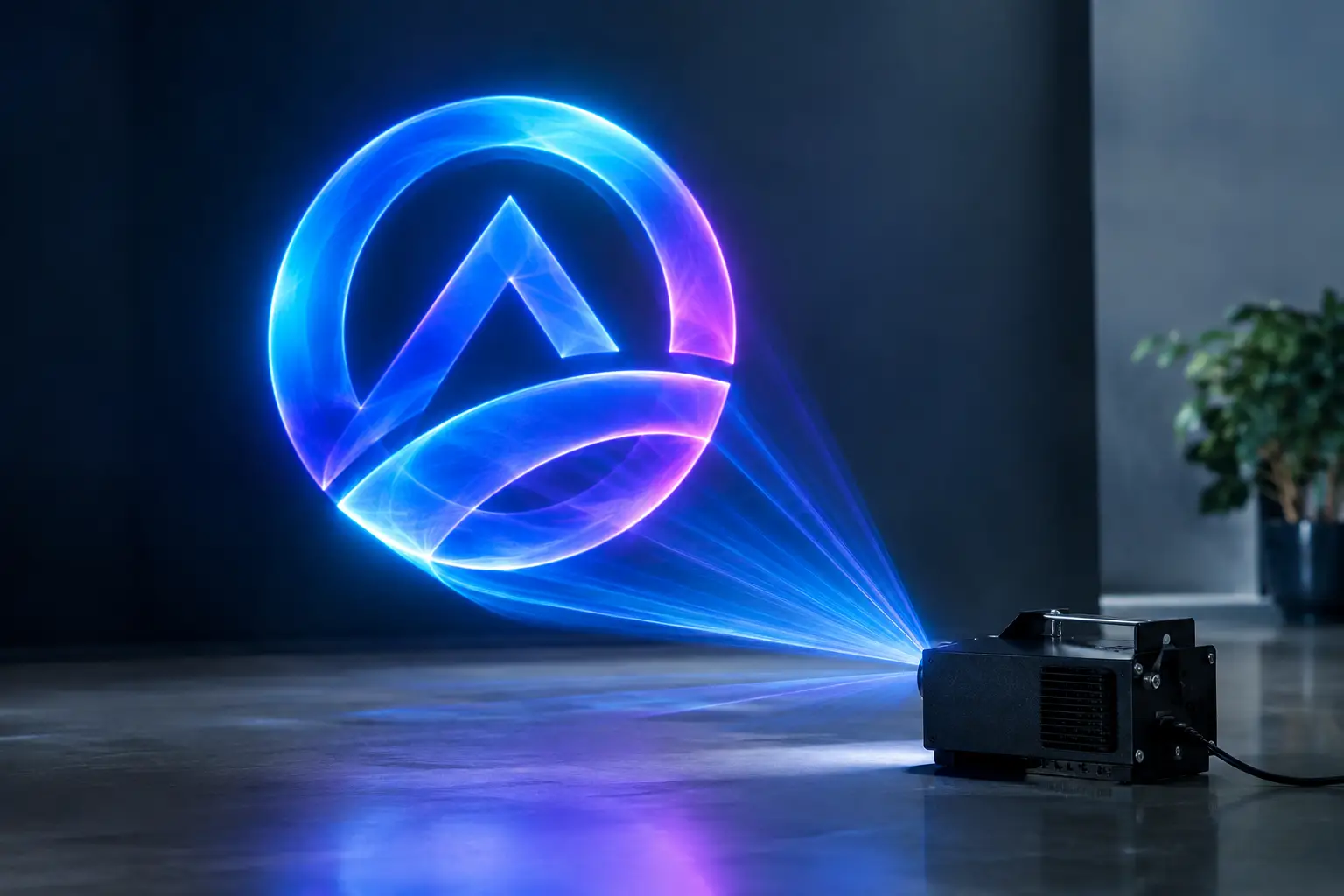
A logo on a screen gets seen. A logo drawn in pure laser light above a crowd gets felt. Creating animated laser logos gives a brand reveal movement, scale, color, and a split-second of anticipation that can shift the energy of an entire room, arena, or outdoor festival field.
For product launches, grand openings, concerts, sporting events, corporate celebrations, and milestone parties, the best laser logo moment is not a static projection with a few effects added around it. It is a custom visual event built around the venue, the audience sightlines, the music, and the exact message the client needs people to remember.
Creating Animated Laser Logos Starts With the Moment
Before an animator draws a single line, define what the logo needs to accomplish. Is it the opening reveal that kicks off a keynote? Is it a sponsor identity that appears between concert sets? Is it the final visual hit at a wedding reception, a bar mitzvah entrance, or a municipal fireworks finale?
That purpose determines the pacing. A corporate logo may begin as a clean line drawing, build into full-color motion, then resolve into a crisp brand mark at the exact moment a speaker takes the stage. A concert logo can arrive with faster motion, dramatic beam effects, and music-synchronized accents. A sporting-event identity may need to read from hundreds of feet away while still carrying enough visual force to excite a full stadium.
The strongest concepts do not try to cram every brand message into one animation. Laser graphics reward clarity. One recognizable logo, one powerful motion idea, and one well-timed reveal usually make a greater impact than a crowded sequence of tiny text and complicated shapes.
Why Laser Animation Is Different From Video
A laser logo is not simply a video file played through a projector. Professional laser systems use precision-controlled mirrors to draw graphics with concentrated beams of RGB light. The result is sharp, intensely colored imagery that can appear to float in the air when haze or atmospheric effects are present, or land with striking clarity on a projection surface.
That difference creates both opportunity and discipline. Lasers excel at bold line work, geometric movement, kinetic outlines, glowing text, and vivid color changes. They can make a logo build itself stroke by stroke, rotate in space, explode into beams, or morph from one brand element into another. On the right stage, the logo becomes part of the architecture of the show.
Fine gradients, extremely detailed photographs, and overly thin typefaces are less suited to laser graphics. A design that looks perfect in a web browser may need to be simplified for maximum readability in laser. This is not a limitation of creativity. It is the production team’s opportunity to translate a flat identity into a graphic that commands physical space.
Design for Distance, Not Just a Laptop Screen
Event planners and marketing teams often see a logo at close range during the approval process. The audience may see it from 30 feet away, 300 feet away, or across a venue packed with moving people and competing visual elements. That is why line weight, letter spacing, contrast, and animation speed matter so much.
Bold logos with clean contours are ideal candidates. Detailed marks can still work, but they may require a simplified show version that preserves the brand’s recognizable silhouette. Small legal copy, lengthy taglines, and dense decorative elements should be treated carefully. If the audience cannot read it quickly, it is better used in another part of the event environment than forced into the laser sequence.
Build the Animation Around Sound and Space
A great animated laser logo has rhythm. It may start with a low-energy trace that builds as the music rises, hit full color on a drum beat, and release into wide aerial beams before returning to the final brand mark. That connection between sound and motion is where a logo reveal becomes pure visual magic.
Music synchronization can be subtle or explosive. For a luxury brand, a controlled sequence with elegant movement and restrained color may be more effective than rapid-fire effects. For a nightclub, festival stage, or high-energy product launch, the animation can be layered with beam chases, aerial fans, tunnels, and sweeping color transitions that turn the whole room into the reveal.
The physical space matters just as much. Indoor ballrooms can support intimate, highly focused graphic moments. Theaters offer controlled sightlines and rich atmospheric conditions. Outdoor events need more power, more distance planning, and a design that remains visible against ambient light. A 40-watt laser system may be ideal for a smaller indoor activation, while a major outdoor event may call for 100 watts, 200 watts, or more depending on scale, viewing distance, and environmental conditions.
The Production Details That Protect the WOW Factor
Big visual ideas only work when the technical foundation is solid. Animated laser logos should be programmed and delivered by experienced professionals who understand graphic optimization, projector placement, scan speeds, venue conditions, and laser safety requirements.
Projector position is especially important. The team must determine where graphics will read best, where beams can travel safely, and how the animation will interact with truss, scenic elements, LED walls, ceilings, windows, and audience areas. Haze can make aerial laser effects spectacular, but too much haze can soften projected graphics. Too little can leave beam effects less visible. The right balance depends on the room and the desired look.
Safety planning is never an afterthought. High-powered entertainment lasers require compliant operation, appropriate safety zones, controlled projection paths, and trained personnel. Audience scanning, if used at all, demands specialized expertise and strict standards. A professional production team evaluates the venue and show design before the event, rather than treating safety as something to solve after the creative work is finished.
Connecticut Laser Productions brings more than 20 years of laser-production experience to this process, pairing custom programming with licensed, insured, safety-compliant operation for productions ranging from private celebrations to massive public events.
Give the Creative Team the Right Assets
A clean vector logo is the best starting point for laser animation. Vector artwork gives programmers the paths they need to build smooth, accurate laser graphics. If the brand has approved colors, typefaces, motion guidelines, or campaign visuals, provide those early as well.
It also helps to share the event run of show. A logo reveal that lasts 12 seconds needs different programming than a 90-second opener. The creative team should know whether the sequence follows a speech, introduces a performer, launches a product, supports a sponsor announcement, or repeats throughout the evening.
When timing is critical, rehearsals are worth protecting. A reveal can be technically flawless and still miss its emotional mark if it fires before the room goes dark, after the audience has already reacted, or out of sync with the music cue. A laser show operator, audio team, lighting designer, stage manager, and event producer should all understand the exact trigger point.
Where Animated Laser Logos Make the Biggest Impact
Branded laser graphics work because they create a sense of occasion. At a corporate event, they can turn a standard walk-on into a headline entrance. At a concert, they can reinforce an artist’s identity without relying on another LED screen. At a trade show or product launch, they can stop traffic and create a visual moment people want to capture and share.
They also work beautifully for private events when the identity is personal rather than commercial. A couple’s monogram can emerge in the air before a first dance. A birthday honoree’s name can sweep across a dance floor. A school, charity, or civic organization can use a logo reveal to give an important gathering the scale and polish of a major live production.
The trade-off is that laser should be selected for the right job. If the event needs dense informational content, long-form video, or close-up product imagery, LED displays and projection may carry that portion of the message more effectively. Laser is at its best when the objective is impact: a bold emblem, a dramatic name, a kinetic icon, or a signature visual punctuation mark.
Make the Final Frame Worth the Build
The final logo hold is often the image that ends up in photos, social clips, and audience memory. Give it enough time to register. Keep it clear. Let the music land. Then use beam effects, color, and movement to make the exit feel intentional rather than abrupt.
When the creative concept, professional equipment, show programming, and safety planning all work together, an animated laser logo does more than display a brand. It gives that brand a live-event entrance people will talk about long after the lights come up.
No responses yet