
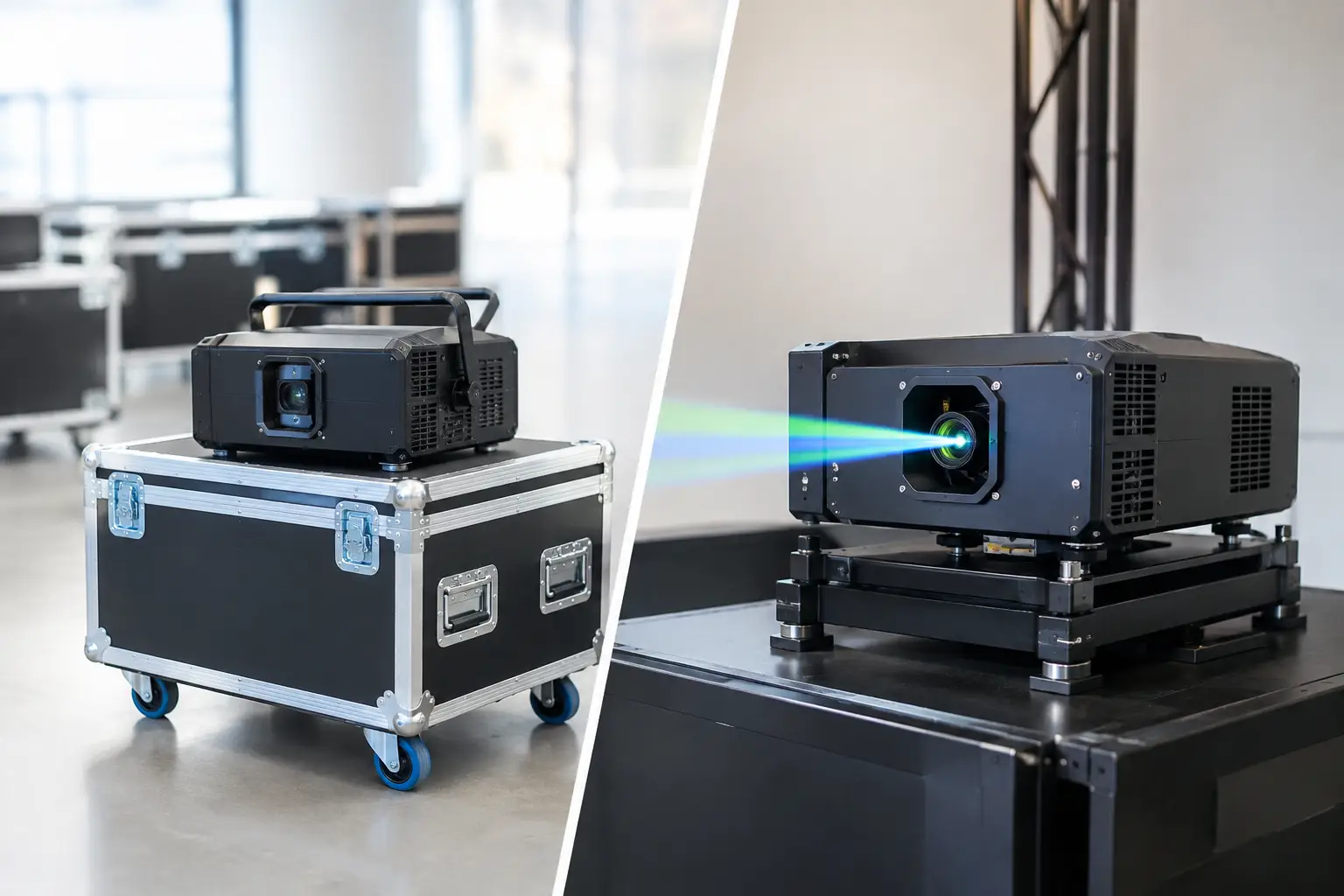
A laser system can turn a dark ballroom into a field of color, launch a concert crowd into a new level of energy, or make a product reveal feel larger than life. But before the first beam cuts through haze, there is a practical decision behind the spectacle: rental versus purchased laser systems. The right answer depends less on which option sounds cheaper and more on how often you need the equipment, who will operate it, and how much creative control your production demands.
For a one-night celebration, a touring season, or a permanent venue installation, the stakes are different. A professional laser projector is not simply another lighting fixture. It is a high-powered visual instrument that requires appropriate system design, safe placement, programming, atmospheric coordination, and qualified operation. Choose the model that supports the show you want to deliver, not just the gear you want to acquire.
Rental Versus Purchased Laser Systems: Start With the Show
The first question is not, “What wattage should I buy?” It is, “What do we need this laser system to accomplish?” A municipal Fourth of July event with thousands of people needs a very different production plan than a wedding reception, nightclub residency, arena tour, or permanent architectural installation.
Renting is often the strongest move when the event is singular, the creative scope is ambitious, or the venue changes from one date to the next. It lets producers scale the laser package to the room, stage, audience size, and sightlines. A compact indoor celebration may need a carefully positioned system with elegant aerial effects and custom names or monograms. A fairground, stadium, or outdoor festival may call for far more output, multiple projector positions, weather-aware planning, and wide-coverage programming built to read across a massive audience.
Purchasing makes more sense when laser is becoming a repeatable part of your operation. A venue with weekly programming, a touring artist with a consistent visual identity, or a production company serving frequent clients can benefit from having equipment ready to deploy. Ownership can create speed, consistency, and long-term control, provided the organization is prepared to support the system properly.
When Renting Delivers the Bigger WOW Factor
A rental package is not a compromise when it is designed around the event. It can be the most powerful route to a breathtaking visual spectacle because you are selecting the right tool for that specific audience rather than forcing every event through the limits of one owned projector.
For event planners and private hosts, turnkey rental production removes a significant amount of technical pressure. The provider can handle system selection, show design, music synchronization, placement, setup, programming, operation, and teardown. That matters when the production includes high-impact beams, animated graphics, logo reveals, laser tunnels, or timed moments that need to hit exactly on cue.
Rental also protects flexibility. If a corporate launch moves from a 400-person indoor venue to an outdoor plaza, the laser package can change with it. If a festival adds a second stage, a larger system can be specified. If the creative direction calls for a giant brand mark, a dramatic opening sequence, or a wall of multicolor aerial effects, the production can be built around the concept rather than a fixed inventory list.
For occasional users, renting avoids capital expense, storage, maintenance, transport cases, software updates, spare parts, and the risk of owning a system that no longer matches the work coming through the door. It also gives clients access to experienced technicians who understand how lasers interact with lighting, video, scenic elements, haze, ceiling height, and audience movement.
That operational layer is a major advantage. The most impressive laser show is not just bright. It is precisely aimed, properly programmed, and run by people who know how to create maximum visual impact while maintaining compliant conditions.
Rental is usually best for these scenarios
Renting is especially compelling for one-time weddings, bar and bat mitzvahs, grand openings, city celebrations, sporting events, and brand activations. It is also smart for tours testing a new visual direction, venues booking occasional special events, and production teams that need a higher-powered package than they normally carry.
A rental partner can bring scale that would be difficult to justify for a single event, from compact professional RGB systems to serious 40-watt, 100-watt, and 200-watt-plus laser power for major outdoor and stadium-scale applications. The result is a show that feels designed for the moment, not borrowed from the last one.
When Buying a Laser System Pays Off
Buying shifts laser from an event expense to an operational asset. For organizations that use lasers frequently, that can be a smart and profitable move. The system is available on your schedule, your team can build familiarity with its capabilities, and your visual language can become more consistent from show to show.
A nightclub, theater, worship venue, educational facility, touring act, or established production company may benefit from owning a professional RGB projector when usage is predictable. Instead of sourcing a system for every date, the team can deploy equipment it knows, integrate it into existing control workflows, and create a library of reusable content.
Ownership is particularly attractive when the application is permanent or recurring. A venue with a carefully engineered installation can build laser into its identity. A touring artist can carry a programmed look from market to market. A production supplier can generate revenue by including its own laser inventory in client packages.
The math should be honest. Compare the full purchase cost with projected rental spend over the expected useful life of the system. Then add shipping, cases, mounting hardware, control equipment, software, insurance, preventive maintenance, repair coverage, technician training, and the labor required to prepare and operate the show. A low sticker price can become expensive quickly if the system sits idle or the team lacks the infrastructure to deploy it safely.
Buying requires more than a projector
A purchased laser system needs a plan for every show day. That includes secure mounting, power distribution, signal routing, control, content creation, transportation, alignment, and post-event service. It also means knowing the legal and safety responsibilities associated with high-powered laser use.
For public-facing productions, professional operation is not optional. Audience scanning, beam paths, venue geometry, outdoor airspace considerations, emergency procedures, and local requirements all require informed decision-making. Depending on the application, federal compliance, required reporting or variances, and insurance obligations may apply. Buyers should confirm that their operators are qualified for the system and environment they intend to use.
This is where a professional equipment supplier can make ownership far more practical. The best purchase is not merely a box shipped to a loading dock. It includes guidance on selecting the right output and feature set, matching the projector to the intended use, and creating a realistic path for setup, service, and safe deployment.
The Real Cost Is Downtime or a Missed Moment
The purchase-versus-rental conversation often starts with day rates and equipment prices. Those numbers matter, but they do not tell the whole story. A laser projector that is too small for a venue can disappear under stage lighting. A system that is too powerful or poorly placed can create safety and compliance issues. A show that fails to launch on the opening cue can undercut months of event planning.
Renting concentrates cost around the event and shifts much of the technical responsibility to the production provider. Buying spreads investment over time but puts the responsibility for readiness on the owner. Neither approach is automatically better. The stronger choice is the one that keeps your production reliable, visually commanding, and appropriate to the scale of the work.
Consider frequency first. If you need a laser show a few times a year, renting usually offers greater flexibility and access to higher-end production capability. If laser is on the schedule every week or embedded in a long-running installation, ownership may deliver value. Then consider creative variability. The more your venues, audience sizes, and concepts change, the more rental can protect you from being boxed into one configuration.
Match the System to the Audience, Not the Spec Sheet
Wattage matters, but it is only one part of a successful laser design. Beam quality, color balance, scan performance, projector placement, throw distance, ambient light, haze, content, and operator skill all shape what the audience sees. A well-designed 40-watt system can be spectacular in the right environment. A larger outdoor production may require dramatically more power and a broader technical plan to create the same sense of intensity across a field or stadium.
That is why Connecticut Laser Productions approaches laser as a complete show element, not a standalone equipment transaction. Whether the goal is a refined private celebration or pure visual magic for tens of thousands of people, the production should be engineered around the audience experience.
If you are planning one unforgettable date, let the package expand to meet the vision. If laser is becoming part of your business, buy with a clear plan for operation, maintenance, and growth. The best system is the one that makes your next big moment look intentional, powerful, and impossible to forget.
No responses yet